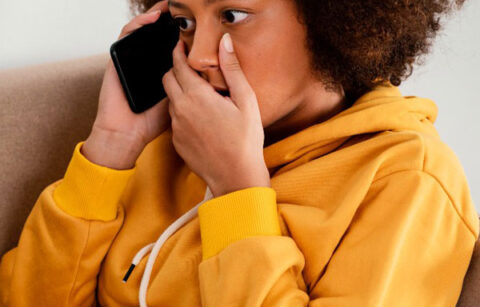
There is a student sitting in your classroom right now who is not okay. Something happened last night. It happened in a group chat, on a screen, in the dark hours when they should have been sleeping. They took a four-hour nap, never processed what happened, continued to extend the conversation as they got ready for school by constantly checking their device… and then they walked through your door. On fire.
I have spent over a decade working with students, families, and schools on digital safety and the rapidly changing world our kids are navigating. One of the most important shifts I have seen in that work is what looks like a behavior problem is very often a nervous system problem. Those two things require completely different responses.
When a student’s brain perceives a threat, the amygdala activates the stress response. For adolescents, social rejection, online humiliation, and unresolved conflict register as genuine threats. Cortisol floods the body. Heart rate increases. And the prefrontal cortex, which is the part of the brain responsible for focus, impulse control, decision-making, and learning, goes offline.
Psychiatrist Dr. Daniel Siegel calls this “flipping the lid.” The prefrontal cortex basically goes offline. And a student who has flipped their lid cannot learn. Not because they will not. Because the part of their brain that makes learning possible is literally not available to them in that moment.


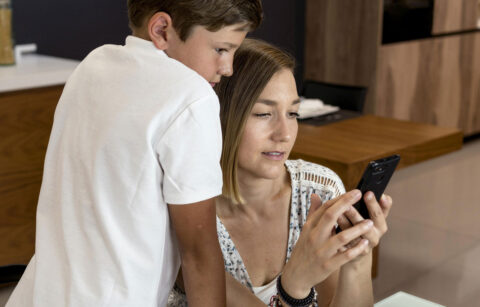
Many of your students may have flipped their lid before they ever walked into your building. A Snapchat notification at 11 pm. A group chat that exploded by midnight. A comment about them that circulated while they slept… or napped, as it was. A TikTok algorithm that served increasingly emotionally activating content until 2 am when they finally put the phone down. They arrive sleep-deprived, neurologically compromised, and already in a state of activation or shutdown. We then wonder why they cannot focus, regulate, or respond reasonably to redirection.
What You Are Seeing And What It Means
School is back. You will start to notice behaviors in your classroom. ( I am willing to bet all the stars and the moon you have already noticed these behaviors over the last ten years) But it looks like the student who explodes when you ask them to put their phone away (or coffee, backpack, keys. You name it). Their amygdala is already activated from something that happened hours ago, and your request tipped an already overloaded system into full threat response. They are not reacting to you. They are reacting to everything that came before you.
It also looks like the student who stares blankly and cannot respond. They are in what neurologist Dr. Stephen Porges describes as dorsal vagal shutdown. A nervous system that has moved beyond fight-or-flight into freeze. They are unreachable because their nervous system has gone into protective shutdown. Most of your student’s emotional threshold was already at capacity before they sat down. Traditional responses such as consequences, escalation, and removal address the behavior without addressing the state. And a nervous system that is on fire cannot process a consequence. It cannot access reason or logic or discipline.

What You Can Do
The good news is that you have more power here than you might think. Co-regulation is incredibly important. A calm, regulated nervous system can actually help calm a dysregulated one. When you approach an activated student with a lowered voice, slowed pace, and steady presence, you are offering your regulated nervous system as a resource for theirs. Giving a dysregulated student two minutes and one low-demand task before redirecting creates space for the nervous system to begin settling. Sending a student on a brief errand or a quick walk activates the parasympathetic nervous system, the body’s natural calm-down mechanism. Teaching students slow, extended exhales (box breathing) activates the vagus nerve and begins to shift the nervous system out of activation. Last, encourage outside sources to speak with students and parents. Because the more we know, the more we can support one another.
Here’s the thing. You did not sign up to compete with an algorithm for your students’ attention and nervous system regulation. But this is the reality of the classroom. It is not your job as a teacher to monitor your students’ device time.
And you cannot teach a nervous system that is on fire. But there’re things we can do to help put the fire out…which supports the student and you.



Kristi Bush serves as a national education consultant and social media safety advocate. She is a licensed social worker with greater than 15 years of clinical practice and health care experience. She attended Troy and Auburn University where she studied social work and counseling. Kristi travels nationally and has spoken with thousands of children, parents, professionals and organizations about the benefits and threats associated with social media. You may reach Kristi through her website at www.knbcommunications.com.

Author: Kristi Bush
Kristi Bush serves as a national education consultant and social media safety advocate. She is a licensed social worker with greater than 15 years of clinical practice and health care experience. She attended Troy and Auburn University where she studied social work and counseling. Kristi travels nationally and has spoken with thousands of children, parents, professionals and organizations about the benefits and threats associated with social media. You may reach Kristi through her website at www.knbcommunications.com.